
Pairing a Sauna With a Cold Plunge for Contrast Therapy
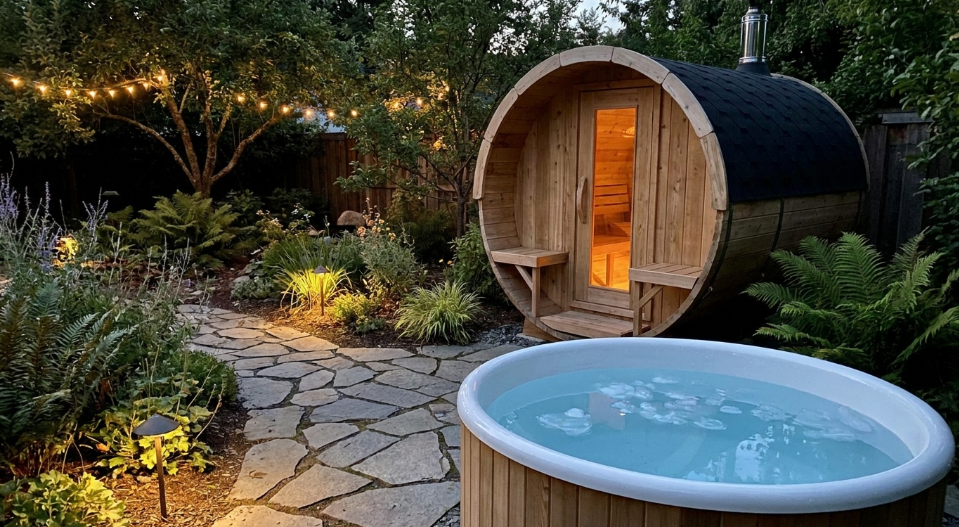
Contrast therapy alternates hot sauna exposure with cold water immersion, typically 10 to 15 minutes of heat followed by 1 to 3 minutes of cold, repeated for two or three rounds and finishing on cold. The combination is popular in recovery and wellness circles because the rapid swing between vessel dilation and constriction produces a stronger circulatory response than either extreme delivers alone, though the science on the cold side specifically is more mixed than sauna advocates often let on. Here’s how a basic home routine works and what the evidence actually supports.
What Is Contrast Therapy, Exactly?
The concept is old, practiced for generations in Nordic sauna culture through rolling in snow or plunging into a lake after a hot session. The modern home version swaps the lake for a dedicated cold plunge tub or a cold shower, and the wood-fired sauna for an electric or infrared cabin, but the underlying mechanism is the same. Heat dilates blood vessels and drives blood toward the skin’s surface. Cold does the opposite, constricting vessels and pushing blood back toward the body’s core. Cycling between the two is thought to act like a pump for circulation, though the exact magnitude of the effect in a home setting, with two or three rounds rather than a lifetime of daily practice, isn’t well quantified.
What Does a Basic At-Home Session Look Like?
A typical pattern: 10 to 15 minutes in the sauna at your normal comfortable temperature, then straight into cold water, whether that’s a plunge tub around 50 to 59 degrees Fahrenheit or a cold shower, for 1 to 3 minutes. Repeat for two or three total rounds, always ending on cold, which is the convention most practitioners follow, partly because ending on heat can leave you flushed and overheated rather than settled. There’s no single validated protocol backed by controlled trials for this exact sequence, so treat these numbers as a sensible starting range, not a prescription, and adjust based on how your body actually responds.
What Does the Cardiovascular Evidence Say About the Sauna Side?
The sauna half of this pairing has real long-term backing. Large Finnish cohort studies have found regular sauna bathing associated with lower rates of fatal cardiovascular events and all-cause mortality over years of follow-up, and a 2018 study in Annals of Medicine found the association held even after accounting for cardiorespiratory fitness. This is association, not proof of causation, since these are observational cohorts following people’s existing habits rather than randomized trials, but the pattern is consistent enough across multiple studies to take seriously as one piece of a broader healthy-lifestyle picture.
What Does the Evidence Say About the Cold Plunge Side?
This is the part that deserves more honesty than most contrast therapy content gives it. A 2025 systematic review and meta-analysis in PLoS One looked at cold water immersion’s effects on health and wellbeing broadly and found a genuinely mixed picture, with some benefits for perceived recovery and mood but limited support for stronger physiological claims. Separately, a Cochrane review on cold-water immersion for muscle soreness after exercise found some reduction in soreness but flagged low-quality evidence across many of the included trials. There’s also a real, specific caution for anyone doing this alongside strength training: cold water immersion right after resistance training has been shown in some research to blunt strength and hypertrophy adaptations, meaning frequent cold plunging right after lifting could work against muscle-building goals even while it feels good in the moment.
How Often Should You Do Contrast Therapy?
Two to three sessions a week is a reasonable starting frequency for most home users, giving your body time to adapt to both the heat and cold stress without turning it into a daily grind that becomes easy to skip. If you’re combining it with serious strength training, consider keeping cold plunge days separate from your heaviest lifting sessions, given the research on blunted adaptations, and save the full hot-cold sequence for lighter training days or rest days instead.
Pay attention to how you feel the next morning, not just right after a session. Some people notice better sleep and less next-day soreness on the days they do a full contrast routine, while others feel fine skipping cold exposure entirely and sticking with sauna alone. There’s no single right frequency here, and adjusting based on your own recovery, rather than copying someone else’s routine off social media, tends to work better over months than any fixed schedule.
What Equipment Do You Actually Need at Home?
The minimum setup is a heat source and a cold source. A home sauna, electric, infrared, or wood-fired, handles the heat side, typically costing $2,500 to $8,000 depending on size and heater type. For cold, a simple cold shower costs nothing beyond what you already have, though a dedicated plunge tub makes it far easier to hold a consistent temperature instead of guessing at how cold your shower actually runs. Plunge tubs range from a few hundred dollars for a basic insulated tub you fill with ice to several thousand for a chiller-equipped unit that holds temperature automatically. Buyers weighing both halves of a home contrast setup side by side, sauna and cold plunge together, can explore the range of home sauna models at a specialty retailer to compare footprint and price before committing to a full setup.
Frequently Asked Questions
What is contrast therapy with sauna and cold plunge?
Alternating between heat and cold exposure, typically a hot sauna session followed by a cold plunge, repeated for two or three rounds.
How long should each round of hot and cold last?
A common pattern is 10 to 15 minutes hot and 1 to 3 minutes cold, for two to three rounds, finishing on cold. There’s no single validated protocol.
Does cold plunging after a workout hurt muscle growth?
Some research suggests cold water immersion right after resistance training can blunt strength and muscle-building adaptations if done regularly.
Do you need special equipment for contrast therapy at home?
The minimum is a home sauna and a cold source, which can be as simple as a cold shower, though a dedicated plunge tub makes temperature consistency easier.
Is contrast therapy safe for everyone?
Most healthy adults tolerate it well, but people with heart conditions, uncontrolled blood pressure, or who are pregnant should be more cautious with the cold side specifically.
References
- Laukkanen, T. et al. “Association between sauna bathing and fatal cardiovascular and all-cause mortality events.” JAMA Internal Medicine, 2015. https://pubmed.ncbi.nlm.nih.gov/25705824/
- “Joint associations of sauna bathing and cardiorespiratory fitness on cardiovascular and all-cause mortality risk: a long-term prospective cohort study.” Annals of Medicine, 2018. https://pubmed.ncbi.nlm.nih.gov/28972808/
- “Effects of cold-water immersion on health and wellbeing: A systematic review and meta-analysis.” PLoS One, 2025. https://pubmed.ncbi.nlm.nih.gov/39879231/
- “Cold-water immersion (cryotherapy) for preventing and treating muscle soreness after exercise.” Cochrane Database of Systematic Reviews, 2012. https://pubmed.ncbi.nlm.nih.gov/22336838/