How Robots Are Used in Industry
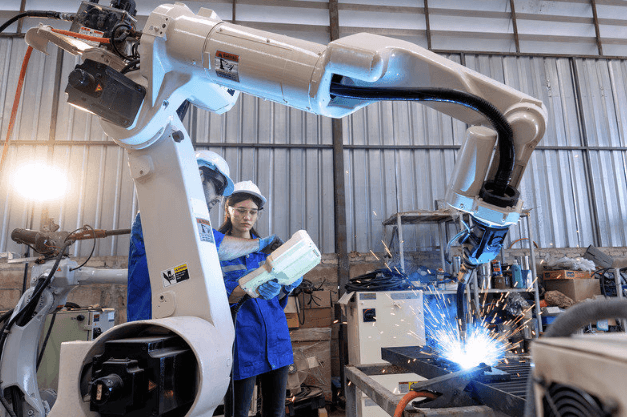
Robots are deployed across manufacturing, logistics, and services to perform repeatable, precision-driven tasks with consistent quality. They enable scalable production, faster throughput, and adaptable workflows within global supply chains. On the factory floor, grippers, vision systems, and autonomous mobile units support handling, assembly, and part verification under collaborative safety protocols. The result is measurable efficiency and traceable outcomes that preserve human autonomy, yet the next steps toward integration and ROI remain complex and nuanced.
How Robots Transform Industry: Core Roles Across Sectors
Robots are deployed across manufacturing, logistics, and service sectors to perform repeatable, precision-driven tasks with consistent quality. They enable scalable production, faster throughput, and adaptive workflows across functions, aligning with global supply chains.
The approach emphasizes measurable improvements and repeatable outcomes.
Ethical considerations address transparency, safety, and accountability, ensuring responsible automation while preserving human autonomy and freedom to innovate within efficiency-driven ecosystems.
What Robots Do on the Factory Floor: Tasks, Tools, and Techniques
On the factory floor, automated systems execute a spectrum of tasks with defined inputs and measurable outputs, building on the efficiencies established in broader industrial deployments.
Robotic grippers perform handling and assembly, vision systems enable part verification, and Autonomous navigation guides mobile units through layouts.
Collaborative safety protocols ensure human-robot interaction remains controlled, repeatable, and efficient.
Choosing the Right Robotic Solution: Platforms, Integration, and ROI
Choosing the right robotic solution requires a structured assessment of platform capabilities, system integration requirements, and expected ROI, with clear criteria for performance, reliability, and total cost of ownership.
The analysis emphasizes platform evaluation and compatibility, data-driven benchmarks, and transparent ROI models.
Consider integration challenges, supplier support, and modularity to enable scalable adoption while maintaining efficiency, reliability, and freedom to reconfigure production flows.
The Future of Industrial Robotics: Safety, Skills, and Smart Manufacturing
How will safety, workforce capabilities, and digitalization shape tomorrow’s manufacturing floor? The future of industrial robotics emphasizes risk reduction, standardized protocols, and verifiable metrics, enabling predictable output and continuous improvement.
Smart manufacturing links sensors, AI, and edge computing to optimize cycles while safeguarding privacy concerns.
Workforce transitions address labor displacement with upskilling, transparent governance, and data-driven collaboration across automation, safety, and operations.
Frequently Asked Questions
How Do Robots Handle Unexpected Production Changes Without Downtime?
Robots handle unexpected production changes with rapid reconfiguration, autonomous scheduling, and modular tooling. This embodies robotics resilience and change ready automation, enabling resilient throughput, minimal downtime, data-driven adjustments, and efficiency that supports a freedom-minded, performance-focused organization.
What Are the Initial and Ongoing Maintenance Costs for Robotics?
Thus: initial maintenance costs cover installation and calibration, while ongoing costs include spare parts planning and lifecycle budgeting; data-driven estimates show predictable maintenance intervals, efficiency gains, and freedom-minded organizations optimizing uptime and total cost of ownership.
How Do Robots Impact Worker Morale and Job Satisfaction?
Robots influence morale by enhancing employee engagement through measurable task variety and job enrichment, boosting worker autonomy. The morale impact varies: positive where roles expand, but concerns arise where automation substitutes tasks, necessitating proactive change management and continuous feedback.
See also: How RAM Works
Can Robots Perform Complex Decision-Making With Limited Data?
Robots can perform complex decision-making with limited data, but face conceptual limitations and data sparsity. From a systematic, data-driven view, efficiency gains exist only when assumptions are transparent and autonomy aligns with freedom-oriented stakeholder goals.
What Cybersecurity Risks Accompany Industrial Robotic Systems?
Industrial robotic systems face cybersecurity threats including malware, unauthorized access, and supply-chain compromise; mitigation relies on systematic testing, robust authentication, and ongoing monitoring. System hardening reduces exposure, while data-driven risk assessment supports efficiency-focused, freedom-valued decision-making.
Conclusion
In industry, robots execute repetitive, precision-driven tasks with measurable consistency, enabling scalable throughput and safer, more efficient operations. Across sectors, grippers, vision systems, and autonomous mobile units bolster accuracy, speed, and traceability, while integration platforms link assets, data, and human oversight. A data-driven ROI lens shows clear gains in uptime, quality, and safety metrics. As the adage goes, “measure twice, cut once”—robust planning and continuous optimization ensure sustainable improvements and resilient supply chains.